

Table of Contents
- Why Getting a Free Painting Estimate Matters
- How to Request a Free Painting Estimate
- Painting Estimate Checklist: What to Prepare
- What Happens During an In-Person Estimate
- How Long Does a Painting Estimate Take
- What to Ask a Painting Contractor Before Hiring
- Painting Quote Comparison: Evaluating Multiple Estimates
- Free Estimate vs. Binding Written Quote: What’s the Difference
- Frequently Asked Questions
Last Updated: October 12, 2026
Why Getting a Free Painting Estimate Matters
A free painting estimate is the first step toward understanding what your project will cost and what quality you can expect. Without one, you might overpay, hire the wrong contractor, or end up with work that doesn’t meet your standards.
Getting a free painting estimate lets you compare options without financial commitment. It shows you how different professionals approach preparation and what materials they recommend, and lets you evaluate whether a contractor communicates clearly and listens to your needs.
At Rooster Painting, we believe a thorough free painting estimate is the foundation of a successful project. It’s not just a price quote, it’s a conversation about your vision, your budget, and how we’ll deliver lasting results.
How to Request a Free Painting Estimate
Requesting a free painting estimate is straightforward, but preparation matters. Start by identifying what you want painted: interior walls, exterior siding, cabinets, trim, or a combination. Be specific about the scope. “Paint my house” is vague. “Interior walls in three bedrooms plus the kitchen” is clear.
Next, gather basic information about your space: approximate square footage or room count, plus any damage, water stains, or surface conditions that might affect the work. Photos help contractors understand what they’re working with before the in-person visit.
When you contact a painting contractor, describe your project briefly and mention your timeline. Ask if they offer a free painting estimate and whether it’s done in person or remotely. Most professional contractors, including Rooster Painting, provide detailed written estimates at no cost. Ask about their experience with similar projects and whether they’re insured.
Request an estimate at a time that works for you, a contractor worth hiring will be flexible about timing. Once you’ve submitted your request, you should hear back within 24-48 hours.
Painting Estimate Checklist: What to Prepare
Preparation before your estimate visit makes a real difference in accuracy. Here’s what you should have ready:
- Clear access to all areas, Remove clutter, move furniture away from walls, and make sure the contractor can move freely through your space
- Existing paint samples or color preferences, If you have paint chips or colors you like, gather them so the contractor can see your vision
- Photos of problem areas, If you have water damage, peeling paint, or specific concerns, photograph them
- Documentation of previous work, If you’ve had painting done before, have that information available; it helps the contractor understand the surface history
- List of your questions, Write down anything you want to ask about preparation, timeline, warranty, or the process itself
- Notes on special requests, Cabinet painting, popcorn ceiling removal, drywall repair, or other specialized work should be mentioned upfront
- Your budget range, You don’t need an exact number, but having a ballpark helps the contractor tailor their recommendation
The more organized you are, the more accurate your free painting estimate will be.
What Happens During an In-Person Estimate
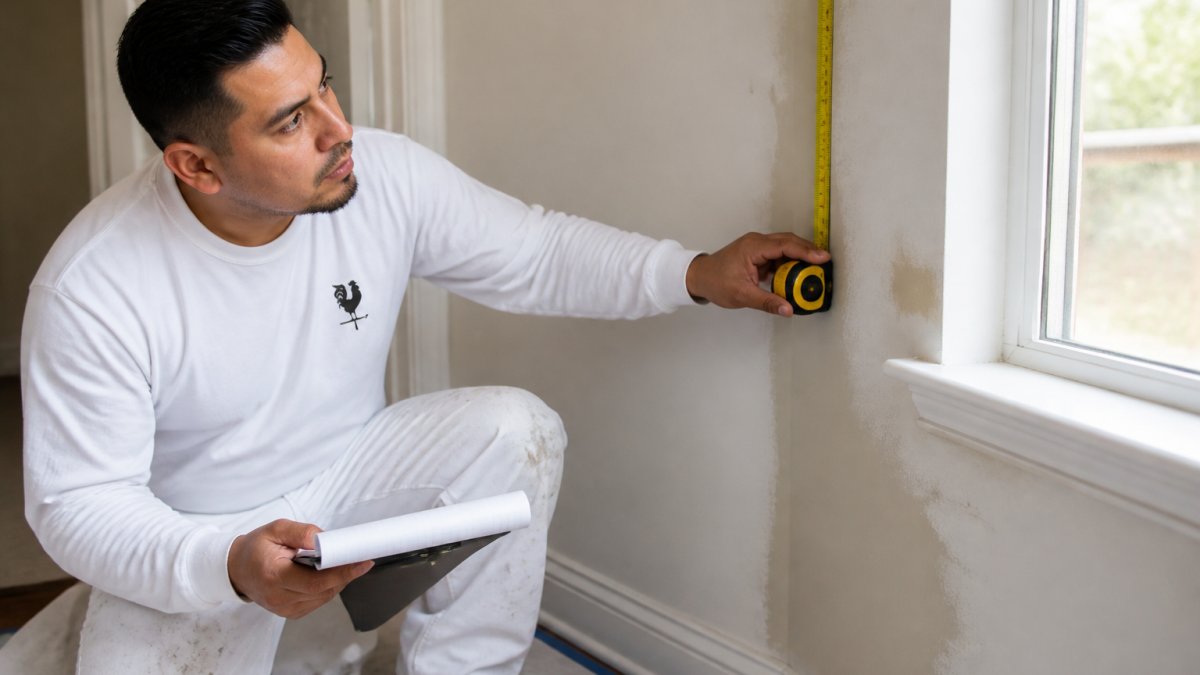
An in-person estimate is where the real assessment happens. Most contractors follow a predictable arc: introductions, a guided walkthrough, measurements, a surface-condition inspection, a scope discussion, and a wrap-up.
The walkthrough. The contractor moves room by room in a logical order, reading the space: ceiling height, trim profile, corners, window and door count, and how furniture or fixtures affect access.
Measurements. A thorough contractor measures wall length and height, subtracts for large openings, and calculates paintable surface area. For exteriors, they measure siding runs, note stories and roof pitch, and flag areas needing ladders, scaffolding, or a lift.
Surface inspection. This separates a real estimate from a phone guess. The contractor checks for peeling, cracking, blistering, chalking, and water staining, presses on soft spots, inspects caulk lines, and checks for mildew.
Scope discussion. Once they’ve seen the space, the contractor walks you through their recommendations. Clarify the number of coats, paint brand and product line, whether ceilings and trim are included, and how color changes between rooms are handled.
Questions you should ask them. Use the visit to gauge professionalism: how they protect floors and furniture, handle pets and daily routines, who will be on site, and how they communicate during the project.
Walk the space yourself the day before and jot down anything you want addressed, from a stubborn stain to a squeaky door. A written list keeps the estimate conversation focused and reduces the chance of missed scope.
What you should leave with. By the end of the visit you should have a verbal summary of scope, a sense of the timeline, and a date for the written estimate. If the contractor can’t explain their plan in plain language, that signals how the project will be managed.
At Rooster Painting, we use this time to understand your expectations and make sure we are aligned before we ever put brush to wall.
How Long Does a Painting Estimate Take
Most in-person painting estimates take 30 to 60 minutes, depending on project size and complexity. A single bedroom might take 20 to 30 minutes. A whole-house exterior or multi-room interior project could take 60 to 90 minutes.
The timeline depends on how many rooms or surfaces are involved, whether repairs or prep work are needed, whether the contractor is inspecting for water damage or structural issues, and how many detailed questions you ask.
Don’t rush this part. A contractor who spends time on your estimate is gathering what they need for an accurate quote and proper planning. If they’re in and out in five minutes, they’re not doing a real assessment.
Click here to Schedule Free Quote →
After the visit, most contractors need a few days to calculate labor, materials, timeline, and special considerations.
What to Ask a Painting Contractor Before Hiring
Before you commit to any contractor, ask these specific questions during your estimate or follow-up conversation:
- What’s included in your preparation process?, Surface cleaning, sanding, priming, caulking, and repairs should all be part of the scope
- What paint brand and quality level do you use?, Premium paints like Sherwin-Williams last longer and look better than budget options
- How many coats of paint will you apply?, Two coats is standard; some projects need three
- What’s your timeline?, When can you start and how long will the project take?
- Are you insured and licensed?, This protects you if something goes wrong
- Do you offer a warranty?, What does it cover and for how long?
- How do you handle changes or unexpected issues?, What if you discover damage during the project?
- What’s your payment schedule?, Do you require a deposit, and when are final payments due?
- Can you provide references?, Ask for recent customers you can contact
These questions reveal how professional and transparent a contractor is.
Painting Quote Comparison: Evaluating Multiple Estimates
Getting multiple estimates is smart. Three estimates give you a realistic picture of what your project should cost and what quality looks like across providers.
When comparing estimates, look beyond the price. Two quotes might differ significantly, and the lowest isn’t always the best value. Here’s how to evaluate them fairly:
- Scope of work, Are all three estimates covering the same prep work, number of coats, and materials? If one is much cheaper, they might be skipping important steps
- Materials specified, Premium paint costs more but lasts longer. Check what grade of paint each contractor recommends
- Timeline, Does the schedule work for you? A rushed job often shows in the results
- Warranty terms, What’s covered? For how long? Better contractors offer stronger warranties
- Communication quality, How responsive were they during the estimate process? That’s usually how they’ll be during the project
A simple side-by-side table makes it easier to see which contractor offers the best overall value, not just the lowest price.
The goal is to find the contractor who combines quality, reliability, and fair pricing. At Rooster Painting, we focus on meticulous preparation and lasting results.
Free Estimate vs. Binding Written Quote: What’s the Difference
A free painting estimate and a binding written quote are related but different documents, and understanding the distinction protects you from surprise charges. An estimate is a good-faith projection; a binding quote is a contractual price.
What a free estimate is. An estimate is an approximate cost based on the contractor’s site visit and experience, outlining the scope of work. Most estimates are non-binding, so the final cost can shift if the contractor discovers conditions not visible at the visit, such as hidden water damage, failed caulk, or multiple layers of old paint.
What a binding written quote is. A binding quote is a formal agreement specifying exact costs, materials, timeline, and warranty terms. Once signed, that’s the price you pay unless you request changes in writing. It protects both sides: you know your number, and the contractor knows the scope won’t drift without compensation.
What should appear in either document. Whether you receive an estimate or a binding quote, look for these elements:
- Scope of work, which rooms, surfaces, and items are included, and which are excluded
- Preparation steps, cleaning, scraping, sanding, patching, caulking, priming, and any repairs
- Materials, paint brand, product line, sheen, and number of coats
- Labor and timeline, start window, expected duration, and daily working hours
- Exclusions, what is not covered, such as moving heavy furniture, lead abatement, or drywall replacement
- Payment schedule, deposit amount, progress payments, and final payment terms
- Warranty, what is covered, for how long, and what voids it
- Change-order process, how unexpected issues are priced and approved
When an estimate becomes binding. An estimate becomes binding only when converted into a signed contract or explicitly labeled a fixed-price quote. Until then, treat it as a planning number. Ask directly: “Is this a binding quote or an estimate, and what conditions would change the price?”
Change orders. Even a binding quote can change if you add scope or the contractor uncovers concealed damage. A reputable contractor documents the change in writing, explains the cost, and gets your approval before doing the work. Insist on paper or email, since verbal approvals invite disputes.
A quote that is dramatically lower than the others is often an estimate with narrow assumptions, not a better deal. Check whether it excludes prep, primer, or a second coat before you compare it to the rest.
A practical comparison. Put your estimates and quotes side by side and check three things: are the scopes identical, are materials specified at the same grade, and are the exclusions the same? If one document is silent on prep or warranty, that silence is the difference in price.
At Rooster Painting, we provide detailed written estimates outlining what’s included, what materials we use, and our warranty coverage. Before we start work, we confirm everything in writing so there are no surprises.
Frequently Asked Questions
How do I get a free painting estimate?
Contact a professional painting contractor and request a complimentary estimate. Most companies offer free in-person estimates where they’ll visit your home, assess the project scope, measure surfaces, and discuss your needs. You can typically schedule by phone, text, or through their website. Rooster Painting offers free detailed written estimates with no obligation, allowing you to compare pricing before committing to any work.
What information do painters need to give an accurate painting estimate?
Professional painters need to know the scope of work (interior or exterior), room dimensions or square footage, surface condition (existing paint, repairs needed), number of coats required, paint finish preference, and any special services like drywall repair or surface preparation. Having this information ready before your estimate appointment helps the contractor provide accurate pricing and prevents surprises later. Clear communication about your expectations and timeline also ensures the estimate reflects your actual project.
Should I get more than one painting estimate?
Yes, getting multiple estimates helps you compare pricing, service offerings, and contractor professionalism. Typically, two to three estimates give you a solid range without creating decision paralysis. When comparing painting quotes, look beyond price alone, consider the contractor’s experience, warranty coverage, insurance status, and the level of detail in their estimate. This approach helps you identify the best value rather than just the lowest cost.
What’s the difference between a free estimate and a binding written quote?
A free estimate is an assessment of likely costs based on the contractor’s inspection and measurement. A binding written quote is a formal agreement specifying exact scope, materials, labor costs, timeline, and terms. After your free painting estimate, a professional contractor should provide a detailed written quote. Always request this in writing before work begins to avoid misunderstandings.