Last Updated: November 2, 2026
Quick Summary
The best way to hire local exterior painters is to ask targeted questions before booking, including who supervises the job and how surfaces are prepared. Then compare written estimates line by line, confirm insurance and contract terms, and never pay the full price before the final walkthrough.
- Ask who supervises the job and how often you will hear from them.
- Confirm the quote includes wood repair, caulking, and priming on bare areas.
- Compare bids on a shared scope template covering surfaces, prep, coats, and products.
- Request a certificate of insurance directly from the contractor’s insurer or agent.
- Hold back final payment until punch-list items are complete at the walkthrough.
Table of Contents
- Why Hiring Local Exterior Painters Takes More Than a Phone Call
- Questions to Ask a Painting Contractor Before You Book
- Building an Exterior Painting Estimate Checklist
- How to Compare Painting Quotes Apples to Apples
- Licensing, Insurance, and Contract Protections to Confirm
- Signs of a Quality Paint Job You Can Check Yourself
- Booking Your Exterior Project With Rooster Painting
- Frequently Asked Questions
Hiring exterior painters is one of the bigger decisions a North Texas homeowner makes for their property. A homeowner who gets several quotes will often find the numbers differ by thousands of dollars with no clear reason why. That gap usually comes down to what each contractor included, what they left out, and whether they answered the questions that matter before the first brush hit the siding. This guide walks through seven questions to ask, and the checks to run, before you sign.
Why Hiring Local Exterior Painters Takes More Than a Phone Call
A quick phone call tells you very little about how a crew will actually run your project. Exterior work depends on surface preparation, weather windows, and the materials a contractor chooses. Most of the problems homeowners report later trace back to decisions made before the job started.
Local painters can have a practical advantage because they work with North Texas heat, storms, and seasonal swings every day. A local contractor should be able to explain how that shapes the prep and product they recommend. Ask them to explain their approach, not just their availability.
Questions to Ask a Painting Contractor Before You Book
Start with the questions that reveal how the company operates day to day. Ask who will supervise the job, how often you will hear from them, and what happens if the start date slips. Many complaints about painters come from silence, not from the paint itself.
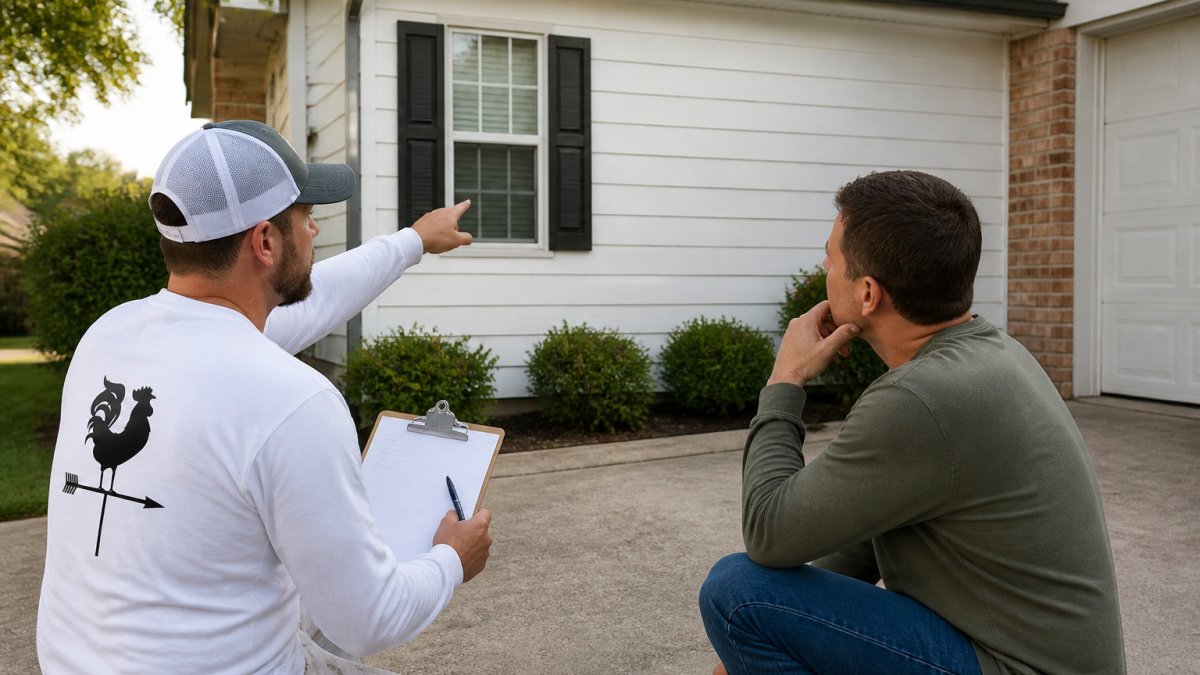
Also ask how they prepare exterior surfaces. Peeling paint can appear within a year or two when surfaces are not scraped, primed, or repaired properly. Ask whether the quote includes wood repair, caulking, and priming on bare areas, since these steps are easy to leave out of a low bid.
The article points to a few specific things to check before booking an exterior painter.
| Check | Why it matters | Source point |
|---|---|---|
| Who supervises the job | Silence, not paint, drives many complaints | Ask who supervises |
| Surface preparation | Peeling can appear within a year or two | Scraping, priming, repairs |
| Wood repair, caulking, priming | Easy to leave out of low bids | Confirm included in quote |
| Start-date slip plan | Shows how the company handles delays | Ask what happens if it slips |
Building an Exterior Painting Estimate Checklist
A written estimate should list the surfaces covered, the preparation steps, the number of coats, the paint product and sheen, and the warranty terms. Rooster Painting provides free detailed written estimates, so you can check each line against what you were promised. You can request a free painting estimate to get started on your own checklist.
Use this checklist when reviewing any estimate:
- Surfaces listed by name (siding, trim, doors, soffits, fascia)
- Preparation steps itemized (washing, scraping, sanding, repairs)
- Primer and number of topcoats stated
- Paint brand and product line named
- Start date, expected duration, and payment schedule included
- Warranty terms written out, not just mentioned
How to Compare Painting Quotes Apples to Apples
Two bids can look identical on the bottom line and still describe completely different jobs. The only reliable way to compare them is to break each one into the same line items, then mark where they diverge. Do this before you negotiate price, because a low number usually reflects a smaller scope, not a better deal.
Start by building a normalization sheet. List the same categories down the left side for every bid you received, and fill in what each contractor actually wrote:
- Surfaces in scope, main siding, trim, fascia, soffits, doors, shutters, garage door, railings, and any detached structures. Note which surfaces are excluded.
- Preparation, pressure washing, scraping, sanding, caulking, patching, wood replacement, and priming of bare or repaired areas. Ask whether prep is a flat allowance or priced per item.
- Coats and products, number of primer coats, number of finish coats, and the specific brand and product line. “Two coats of premium paint” means little until the product is named.
- Labor and crew, who supervises, how many painters are assigned, and whether the same crew preps and finishes.
- Exclusions, lead-safe work on pre-1978 homes, HOA color approvals, moving furniture or planters, and any surface the contractor will not touch.
- Schedule and payment, start window, expected duration, deposit amount, and progress payments tied to milestones.
- Warranty, workmanship term, manufacturer product warranty, and what voids either one.
Once the sheet is filled in, convert every bid to the same scope. If one contractor excluded trim and another included it, ask the first to price trim as a line item. If one specified a single finish coat and another specified two, ask for the two-coat price. This is the fastest way to see which number reflects better work and which simply skipped steps.
Ask each contractor to resubmit on a shared scope template. Most will do it, and the revised bids are far easier to defend if a dispute arises later.
Watch for three common mismatches. First, a low bid that prices prep as a small allowance and then bills overages once scraping begins. Second, a bid that names a premium product but applies only one finish coat, which shortens the service life the product was chosen for. Third, a bid that omits the warranty page entirely, leaving you with no written recourse if peeling appears.
A useful sanity check is to compare the total against the scope, not against the other bids. A bid that includes full prep, two finish coats of a named product, and a written workmanship warranty is doing more work than a cheaper bid that lists only “pressure wash and paint.” When the scopes finally match, the price gap usually shrinks, and the remaining difference is the real conversation about value.
Licensing, Insurance, and Contract Protections to Confirm
This is the section most homeowners skim and later regret. The checks below take about twenty minutes and protect you from the two most expensive outcomes: property damage from an uninsured crew and a dispute with no written terms to point to.
Click here to Schedule Free Quote →
Licensing and registration. Licensing requirements for painting work vary by location, so do not assume a license number alone proves competence. What you can verify is business registration and, where required locally, a contractor registration or home-improvement license. Ask for the legal business name and check it against your state’s business registry and any local contractor registration database.
Insurance certificates. Request a certificate of insurance directly from the contractor’s insurer or agent, not a photocopy the contractor printed. Confirm three things:
- General liability, covers damage to your home, siding, windows, and landscaping.
- Workers’ compensation, covers injuries to crew members on your property. Without it, an injured worker may look to your homeowner policy.
- Automobile liability, covers company vehicles and trailers parked on or near your property.
Check that the policy is current, that the limits are stated, and that the certificate lists the correct legal business name. Ask whether you can be named as an additional insured for the project duration if the contractor’s policy allows it.
Permits and HOA approvals. Whether a permit is needed depends on the local jurisdiction and the scope of work, so ask your local building department before work begins. Ask the contractor who pulls the permit if one is needed, and get that answer in writing. If you live under an HOA, confirm color approval before the first coat goes on, repainting an unapproved color can mean repainting at your expense.
Contract clauses to read line by line. A useful exterior painting contract states:
- The full scope, by surface, matching the written estimate.
- The paint products and number of coats.
- Start date, expected duration, and weather-delay language.
- Payment schedule tied to milestones, with a deposit that is reasonable for materials.
- Change-order procedure, who approves, in what form, and how the price adjusts.
- Warranty terms, including workmanship duration and exclusions.
- What happens if work is damaged, the crew leaves the job, or a dispute arises.
Never pay the full contract price before the final walkthrough. A holdback until punch-list items are complete is standard practice and gives you leverage if touch-ups are needed.
Lien protection. Ask for lien waivers from the contractor and, where subcontractors are used, from those subs as payments are made. A lien waiver confirms that workers and suppliers have been paid and reduces the chance of a mechanics lien against your property.
Rooster Painting is an insured painting company, and we are glad to walk homeowners through our coverage, contract terms, and warranty before they sign. Bring this checklist to any contractor you interview, the ones who answer it cleanly are the ones worth comparing on price.
Signs of a Quality Paint Job You Can Check Yourself
You can judge much of a paint job without special training. Look for clean edges where colors meet, even coverage without thin spots, and caulk lines that are neat and continuous. Check that hardware and fixtures were removed or masked rather than painted over.
Walk the property in daylight at the end of the job and look at the surfaces from an angle. Flaws that were invisible up close often show up under raking light. Note any issues in writing and raise them with the crew before final payment.
Booking Your Exterior Project With Rooster Painting
If you want an exterior project that is prepared carefully and communicated clearly, we would welcome the chance to earn your business. Rooster Painting has been painting homes across North Texas for over 19 years, and every project starts with a free detailed written estimate and a free color consultation to help you choose a palette that suits your home.
Get a free painting estimate today or contact our team to tell us about your project. Our estimates lay out the scope line by line, so you can compare them with confidence. For a deeper look at what drives your quote, read our residential painting cost factors guide, and our painting warranty coverage guide explains what protection to expect after the job is done.
Frequently Asked Questions
How much does an exterior painter charge?
Exterior painting pricing depends on the size and height of the home, the condition of the surfaces, the number of colors, and the prep work required. Rooster Painting does not publish standard prices in this article because every project is different. The most reliable way to get an accurate number is to request a free detailed written estimate, which itemizes labor, materials, prep, and any repairs. Compare estimates line by line so you can see what each price actually includes.
What should an exterior painting estimate include?
A complete exterior painting estimate should list the scope of work, surface preparation steps, the number of coats, the paint brand and product line, and whether trim, doors, and soffits are included. It should also state the warranty terms, the payment schedule, and the project timeline. Ask whether any drywall repair, wood rot replacement, or caulking is covered. A written estimate that leaves these items out makes it hard to compare bids fairly.
How can I tell if an exterior paint job is high quality?
Look for even coverage with no lap marks, drips, or thin spots, and check that caulk lines are clean and that trim edges are sharp. Peeling or bubbling after a year or two often points to poor surface prep rather than the paint itself. Ask the contractor how they prepped the surface, including washing, scraping, sanding, priming, and any wood repair. Inspect the work in daylight at several angles before signing off.
What should I ask an exterior painting contractor before hiring?
Ask whether the company is insured and can provide a current certificate of liability insurance, and whether its crew is employed directly or subcontracted. Confirm the warranty terms in writing and ask who handles any warranty claims. Find out how the company communicates during the project, who your point of contact is, and how often you will get updates. Clear answers to these questions reduce the risk of a stalled project.
