
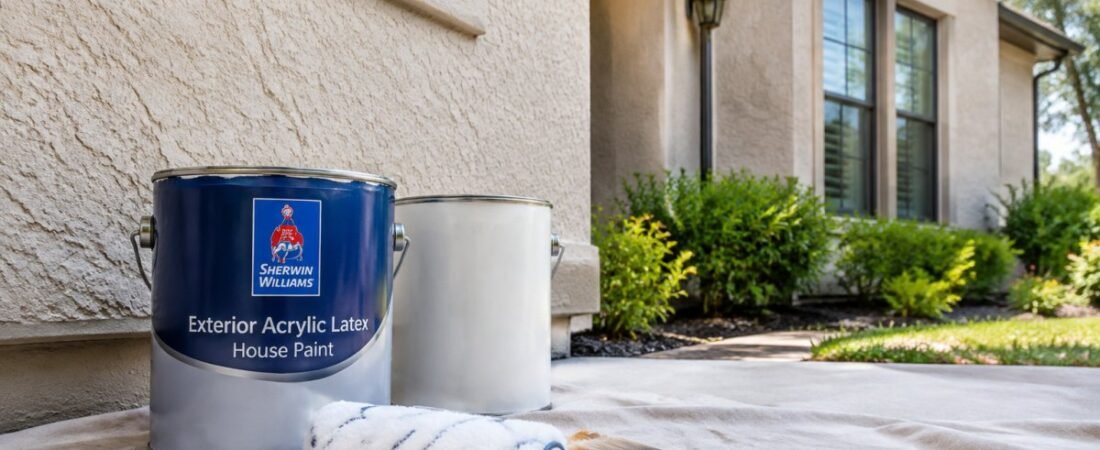
Last Updated: November 22, 2026
Quick Summary
The best exterior paint finish for stucco is a flat or low-sheen 100% acrylic coating applied over properly cured, repaired stucco. This combination hides texture, resists moisture, and holds color longer than satin or gloss on masonry walls. Flat is ideal for textured or patched stucco, while low-sheen suits most stucco homes.
- Flat finish scatters light instead of reflecting it, so bumps, patches, and repairs disappear on textured stucco.
- Satin sheds water and wipes clean easily but highlights ripples, patches, and touch-ups on rough stucco.
- Choose breathable 100% acrylic on sound stucco and move to elastomeric only for recurring cracks or water intrusion.
- New stucco needs adequate curing time and a pH check before any paint will bond properly.
- Spraying suits large open stucco walls, while rolling and back-rolling work better for detail areas and deep texture.
Table of Contents
- Why Stucco Paint Finish Matters More Than You Think
- Flat Exterior Paint vs Satin: How Sheen Changes Stucco Performance
- The Best Paint for Stucco Sherwin-Williams Offers: Acrylic vs Elastomeric
- Can You Just Paint Over Stucco? What Surface Prep Actually Requires
- Is It Better to Spray or Roll Exterior Paint on Stucco?
- How Climate and Exposure Affect Your Stucco Paint Finish Choice
- Matching Finish to Stucco Body, Trim, and Doors
- Schedule a Free Stucco Painting Quote
- Frequently Asked Questions
Why Stucco Paint Finish Matters More Than You Think
The best exterior paint finish for stucco is a flat or low-sheen 100% acrylic coating, applied over properly cured, repaired stucco.
Stucco is not siding.
Finish affects three things: how well the wall hides texture and hairline cracks, how easily it sheds water, and how often you’ll repaint.
Below, we’ll break down flat versus satin, acrylic versus elastomeric, and the prep work that decides whether any of it lasts.
Flat Exterior Paint vs Satin: How Sheen Changes Stucco Performance
Sheen is the biggest decision in stucco painting. Flat and satin behave very differently on a textured masonry wall.
Flat Finish: Best for Hiding Stucco Texture and Imperfections
Flat finish is the best exterior paint finish for stucco walls with heavy texture, patched areas, or visible imperfections. It scatters light instead of reflecting it, so bumps and repairs disappear.
- Hides texture: the top reason we recommend it on older stucco
- Touch-up friendly: patched spots blend in months later
- Lower sheen, less glare: a strong plus on sun-baked south and west walls
Best for: textured stucco, older homes, and anyone who wants a uniform, matte look.
Skip if: the wall sits under heavy tree cover and collects grime.
Satin Finish: Washability and Moisture Resistance at a Cost
Satin finish gives stucco a soft sheen and a slicker surface that sheds water and wipes clean more easily.
The cost is honesty about texture. Satin reflects light, and reflected light finds every ripple, patch, and crack repair.
- Washable: road dust and pollen wipe off with a damp cloth
- Water resistance: a tighter film helps on walls that take splash
- Trade-off: highlights imperfections and shows touch-ups
Best for: smooth stucco, newer builds, and high-traffic lower walls.
Skip if: your stucco is heavily textured or has been patched in several places.
| Finish | Hides Texture | Washability | Moisture Resistance | Best For |
|---|---|---|---|---|
| Flat | Excellent | Fair | Good | Textured or patched stucco |
| Low-sheen | Good | Good | Good | Most stucco homes |
| Satin | Poor | Excellent | Very good | Smooth, newer stucco |
The Best Paint for Stucco Sherwin-Williams Offers: Acrylic vs Elastomeric
For most stucco, a 100% acrylic masonry coating is the right default. Elastomeric is a targeted upgrade, not an automatic one. The difference is how each handles water vapor, movement, and the stucco’s chemistry, and getting that wrong is how coatings fail from the inside out.
How acrylic masonry coatings work on stucco
Acrylic masonry paint forms a flexible, breathable film that bonds to the porous, alkaline surface. Breathability is key: stucco and the framing behind it hold some moisture, and a breathable film lets that vapor pass through instead of trapping it. Acrylic also stays flexible through thermal cycling and holds color under UV.
- Choose acrylic for sound stucco with normal texture and no recurring cracks
- Choose acrylic on shaded or humid walls where vapor escape matters most
- Choose acrylic when the existing coating is unknown and you want the most forgiving bond
How elastomeric coatings work, and when they earn their place
Elastomeric coatings form a thicker, rubber-like film that stretches and bridges hairline cracks. That crack-bridging is real value on stucco that keeps reopening the same small cracks, or on walls with a history of water intrusion there. The trade-off is breathability: the tighter film lets less vapor escape.
- Choose elastomeric for stucco with recurring hairline cracks or past leak points
- Choose elastomeric on walls that take driven rain and need a more water-resistant shell
- Do not choose elastomeric as a blanket upgrade on a damp or shaded wall with no crack problem
The moisture trap: why coating choice can backfire
A serious failure occurs when a tight film is painted over a wall with active moisture behind it. Water finds its way in, cannot get out, and blisters or pushes the coating off in sheets.
- Fix water first: repair leaks, grading, and flashing before coating
- Confirm cure: new stucco needs adequate curing time and a pH check before painting
- Match breathability to exposure: tighter films on damp walls invite trapped moisture
Watch out: elastomeric over an unknown existing coating can fail at the bond line, so always test adhesion on a small area before committing to the full wall.
Compatibility and testing before you commit
Coating compatibility is where guesswork gets expensive. If the wall already has a coating, you need to know whether it is acrylic, elastomeric, or something else, because a new film must bond to what is there. A simple adhesion test on a small patch, applied and allowed to cure, tells you more than any label.
- Identify the existing coating before choosing a new one
- Test adhesion on a small area and let it cure
- Prime bare and patched spots for an even bond and uniform finish
A practical selection rule
Start with breathable 100% acrylic on sound stucco. Move to elastomeric only when the wall has a documented crack-bridging or water-intrusion need, and only after the moisture source is resolved. Never stack a tight coating over a damp wall or an unknown film without testing. Moisture first, compatibility second, coating third.
Can You Just Paint Over Stucco? What Surface Prep Actually Requires
No. Painting straight over dirty, chalky, or cracked stucco is the fastest way to a peeling job. Surface preparation separates a coating that lasts from one that fails in a couple of years.
Stucco is porous and alkaline when new, and fresh stucco needs time to cure before paint will bond. Prep follows a clear order:
- Wash the wall to remove dirt, chalk, and mildew
- Let it dry fully before any coating goes on
- Repair cracks and patch damaged areas with matching material
- Check pH on newer stucco and let it neutralize before painting
- Prime bare or patched spots so the topcoat bonds evenly
The peeling problem homeowners describe, paint failing after a year or two, almost always traces back to a skipped step here. Proper prep is also the core of how to prevent exterior paint peeling on any masonry surface.
Is It Better to Spray or Roll Exterior Paint on Stucco?
Spraying is better for large, open stucco walls because it drives paint into the texture evenly and fast. Rolling and back-rolling work better for detail areas, tight corners, and getting full penetration on rough surfaces.
- Spray only: fast, but can leave the surface under-filled on deep texture
- Roll only: good penetration, slower on big walls
This is also where professional work pulls ahead of DIY. If you’re weighing the two, why professional painting lasts longer than DIY explains the difference in prep, product, and application.
How Climate and Exposure Affect Your Stucco Paint Finish Choice
Most guides treat climate as a footnote. In practice, exposure decides whether a flat finish looks clean in year five or chalky and streaked by year three.
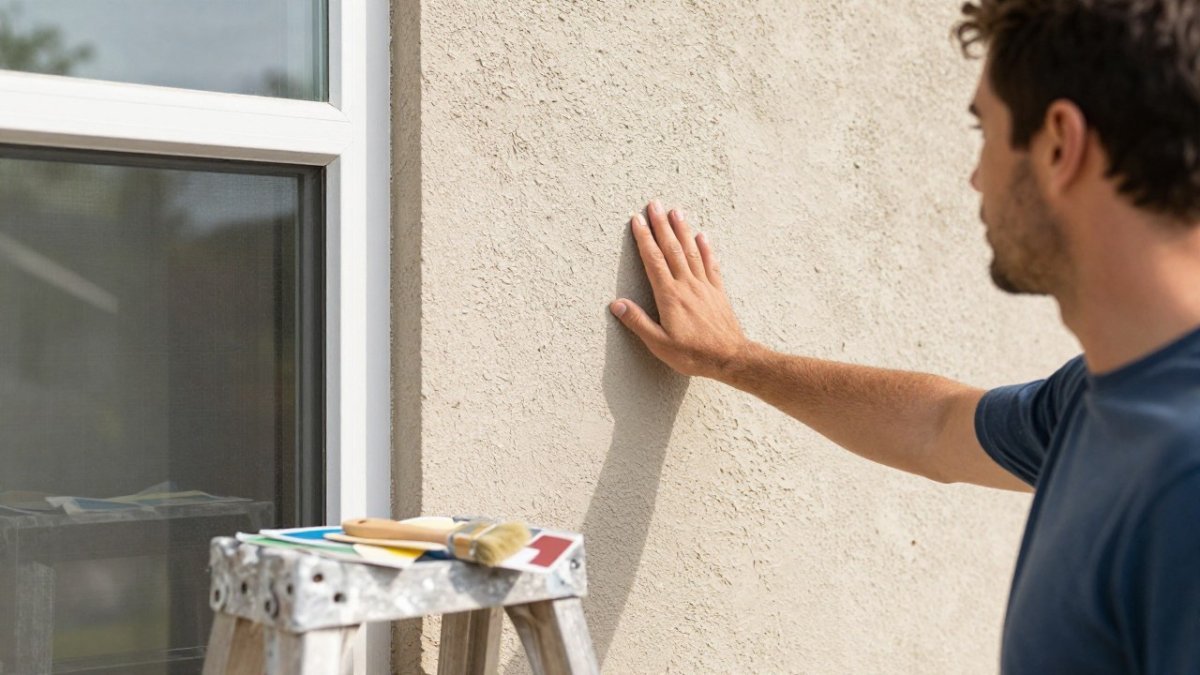
Full-sun, hot exposures (south and west walls)
These walls take the most UV and thermal cycling. The priority is color retention and film flexibility, not washability. A flat or low-sheen 100% acrylic holds color and moves with the wall better than a higher-sheen film, which can chalk and glare under direct sun.
- Priority: UV resistance and flexibility
- Best finish: flat or low-sheen acrylic
- Watch out: dark colors absorb heat and accelerate film stress, so expect shorter color life on a deep-toned south wall regardless of sheen
Shaded and north-facing walls
Shade keeps moisture on the wall longer and encourages mildew and dirt film. Here, a cleanable surface matters more than hiding texture. A low-sheen or satin finish wipes down better and sheds water, but only if the wall is smooth enough that the sheen does not spotlight imperfections. On heavily textured shaded stucco, stay flat and plan on more frequent cleaning.
- Priority: moisture resistance and washability
- Best finish: low-sheen on smooth stucco; flat on rough stucco with a cleaning schedule
- Watch out: shaded walls that stay damp are the first place mildew appears, and a non-breathable coating there traps the moisture that feeds it
Humid and rainy stretches
In humid conditions, breathability outranks water shedding. A breathable acrylic lets vapor escape so moisture does not push the film off from behind. Elastomeric sheds rain well but is less breathable, so it is a poor default in humid, shaded conditions unless the wall has a documented crack-bridging need. Choose the most breathable coating that still meets the wall’s crack and water needs.
- Priority: vapor escape
- Best finish: breathable 100% acrylic
- Watch out: sealing a damp wall with a tight film is how blistering starts
Coastal and splash zones
Walls that take wind-driven rain or salt spray need a tighter, more water-resistant film and more frequent cleaning. A low-sheen acrylic with good water resistance is the usual compromise; satin is acceptable on lower walls and smooth stucco where washability matters most. Rinse salt and grime regularly.
- Priority: water resistance plus cleanability
- Best finish: low-sheen to satin acrylic on smooth surfaces
- Watch out: salt and pollen bond to flat films in splash zones, so flat there means more maintenance
A simple exposure decision rule
If a wall is hot and sunny, favor flat for color and flexibility. If it is shaded and damp, favor breathability first and washability second. If it takes splash or spray, favor water resistance and plan to clean.
Local guidance on regional products helps, and our best exterior paint for North Texas guide covers what holds up in this climate.
Matching Finish to Stucco Body, Trim, and Doors
The stucco body should carry the flattest finish in the scheme, with trim and doors allowed a slightly higher sheen for contrast and durability.
A flat or low-sheen body lets the texture read as texture, not glare.
- Stucco body: flat or low-sheen acrylic
- Trim and fascia: satin for cleanability
- Doors: satin or semi-gloss for durability and definition
Color selection is its own decision, and an in-person consult beats a swatch every time. Colors shift dramatically on a sunlit stucco wall.
Schedule a Free Stucco Painting Quote
Choosing the best exterior paint finish for stucco comes down to your wall’s condition, its sun exposure, and how much texture you want to hide.
If you’d rather not guess, you can request a free detailed written estimate from Rooster Painting.
Get started with Rooster Painting and protect your stucco with a finish built for this climate. You can request exterior painting service and a quote or contact our team with questions about your project.
Your stucco has already told you what it needs: the cracks, the chalky patches, the faded south wall.
Frequently Asked Questions
What is the best paint finish for stucco exterior?
For most stucco homes, a flat or low-sheen acrylic finish is the best starting point. Flat hides the texture and small cracks that stucco naturally develops, while low-sheen adds a bit of washability without highlighting bumps. Satin works well on trim and doors but can spotlight imperfections on large stucco walls. The right stucco paint finish depends on your wall condition, how much cleaning you expect to do, and your local weather exposure.
Should stucco be painted flat or satin?
Flat is usually the safer choice for the main stucco body because it absorbs light and softens texture, cracks, and patch marks. Satin reflects more light, which makes it easier to wipe down but also makes every bump visible. If your stucco is in good shape and you want a scrubbable surface, satin can work on lower-traffic areas. On older or textured walls, flat exterior paint vs satin often comes down to how much imperfection you want to hide.
Can you just paint over stucco without prep?
You can paint over stucco, but skipping prep is why many jobs peel within a couple of years. Stucco needs to be clean, dry, and free of chalky residue, and any cracks wider than a hairline should be repaired and primed first. A masonry primer helps the topcoat bond, especially on patched areas. If you are wondering can you just paint over stucco, the honest answer is yes, but only after the surface is sound and prepped.
Is it better to spray or roll exterior paint on stucco?
Spraying pushes paint into the pits and texture of stucco faster and gives more even coverage on large walls. Rolling forces paint into the surface and can work well for small areas or touch-ups, but it takes longer and can leave a stippled look. Many crews spray the body and back-roll while the paint is wet to work it into the texture. Whether it is better to spray or roll exterior paint on stucco depends on wall size, access, and the finish you want.
