
Last Updated: November 26, 2026
Quick Summary
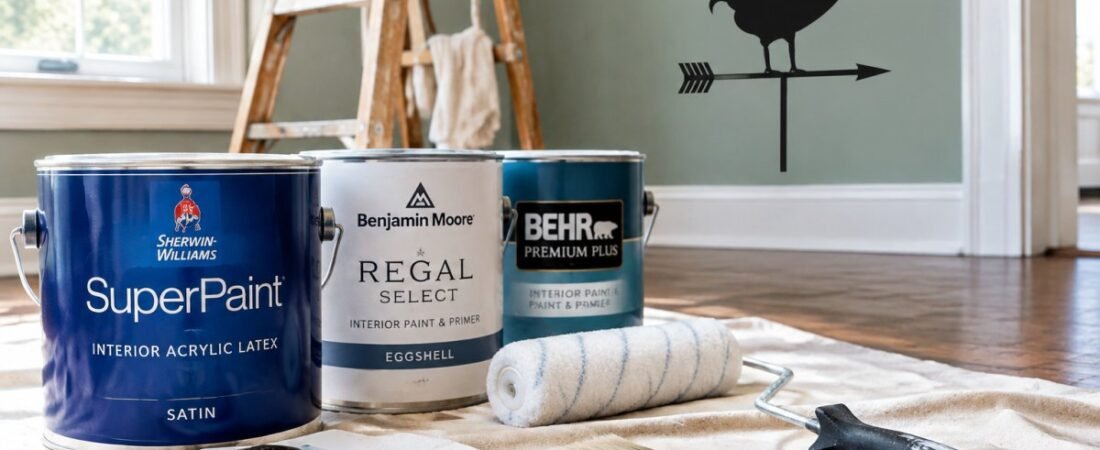
The best paint brands for home interiors are Sherwin-Williams, Benjamin Moore, Behr and PPG. Sherwin-Williams Emerald is a strong choice for whole-home repaints, Benjamin Moore Regal Select excels in color-critical rooms, Behr offers good value for budget refreshes, and PPG is a reasonable middle option.
- The brand matters less than the specific line within that brand.
- Finish choice drives durability more than brand does.
- Going from a deep red to a light gray usually needs a primer or extra coat.
- Cost per finished room matters more than price per gallon.
- Lower-VOC paints reduce odor and improve indoor air for bedrooms and nurseries.
Table of Contents
- How We Compare Paint Brands for Home Interiors
- The Best Paint Brands for Home Interiors at a Glance
- Sherwin-Williams vs. Benjamin Moore Interior Paint
- The Best Interior Paint for Walls by Room and Surface
- The Best Paint Colors for Interior Walls
- Coverage, Durability, and What Paint Brands Don’t Advertise
- What Paint Brands Cost per Finished Room
- Schedule a Free Color Consultation and Written Estimate
- Frequently Asked Questions
How We Compare Paint Brands for Home Interiors
The best paint brands for home interiors are the ones that hold up after the second coat dries, not the ones with the loudest shelf display. The gap between a premium can and a budget can shows up fast: in coverage, in how the finish levels out, and in whether the paint still looks clean two years later.
This guide compares the major brands on hiding power, application feel, washability, and cost per finished room.
Here is the short answer before the details. Sherwin-Williams is a strong choice for its Emerald line, which combines solid coverage with a finish that touches up cleanly. Benjamin Moore is a close competitor for color depth. Behr offers good value for budget-conscious rooms. PPG is a reasonable middle option. Below, we break down each brand, the best paint brands for home interiors by room, and what the labels leave out.
The Best Paint Brands for Home Interiors at a Glance
Here is how the four major brands stack up on the factors that matter most in a finished room.
| Brand | Signature Interior Line | Best For | Standout Strength | Watch Out For |
|---|---|---|---|---|
| Sherwin-Williams | Emerald | Whole-home repaints | Coverage and touch-up consistency | Higher price per gallon |
| Benjamin Moore | Regal Select | Color-critical rooms | Depth and richness of color | Fewer retail locations |
| Behr | Marquee / Premium Plus | Budget refreshes | Strong coverage at a lower price | Sheen can vary by line |
| PPG | Interior lines vary | Mid-range projects | Broad availability | Product specs harder to compare |
What the Comparison Table Doesn’t Tell You
A table ranks brands. It cannot tell you whether a paint will level out under a roller or leave lap marks when the room heats up.
Independent testing from Consumer Reports’ interior paint testing puts all four of these brands through stain resistance, hiding, and durability checks, and the results shift year to year as formulas change. That is why we treat any single test as a starting point, not a verdict. The brand matters less than the specific line within that brand. A premium line from a mid-tier brand often beats an entry-level line from a premium one.
Sherwin-Williams vs. Benjamin Moore Interior Paint
Sherwin-Williams and Benjamin Moore are the two brands professional painters argue about most, and the honest answer is that both are excellent. The difference comes down to what you value more: predictable coverage or richer color.
Sherwin-Williams Emerald is often described as laying down evenly, and Benjamin Moore’s Regal Select is often valued for its depth of color.
A common mistake is choosing a brand first and a color second. Pick the color you love, then confirm the brand’s line can deliver it in the finish you need.
The Best Interior Paint for Walls by Room and Surface
The best interior paint for walls depends on the room, not on brand loyalty. A finish that shines in a hallway can look flat and cheap in a dining room. The table below outlines how brand line, sheen, and pairing reasoning can vary room by room.
| Room or Surface | Brand and Line | Sheen | Why This Pairing |
|---|---|---|---|
| Living rooms and bedrooms | Sherwin-Williams Emerald | Matte or eggshell | Even coverage over large fields; matte hides wall imperfections, eggshell adds scrubability |
| Kitchens | Benjamin Moore Regal Select | Satin | Resists grease and moisture; wipes clean without burnishing |
| Bathrooms | Benjamin Moore Regal Select or Sherwin-Williams Emerald | Satin | Moisture tolerance with a finish that sheds splashes |
| Hallways and stairwells | Sherwin-Williams Emerald | Eggshell | Scuff resistance where hands and bags brush the wall daily |
| Kids’ rooms and playrooms | Behr Marquee | Eggshell | Strong hiding at a lower price for rooms likely to be repainted sooner |
| Ceilings | Sherwin-Williams Ceiling Paint or Benjamin Moore Waterborne Ceiling Paint | Flat | Flat sheen hides roller marks and reflects less light |
| Trim, doors, and baseboards | Benjamin Moore Advance or Sherwin-Williams Emerald Urethane Trim Enamel | Semi-gloss or satin | Hard, washable film that stands up to contact |
| High-traffic commercial-style spaces | PPG interior lines | Eggshell or satin | Broad availability for touch-ups and mid-range cost |
Finish choice drives durability more than brand does. A matte paint in a bathroom will fail before a satin paint from a lesser brand, because sheen controls how the film resists moisture and scrubbing.
How Household Conditions Change the Spec
A house with dogs, toddlers, or a home office gets a different spec than a quiet retirement home.
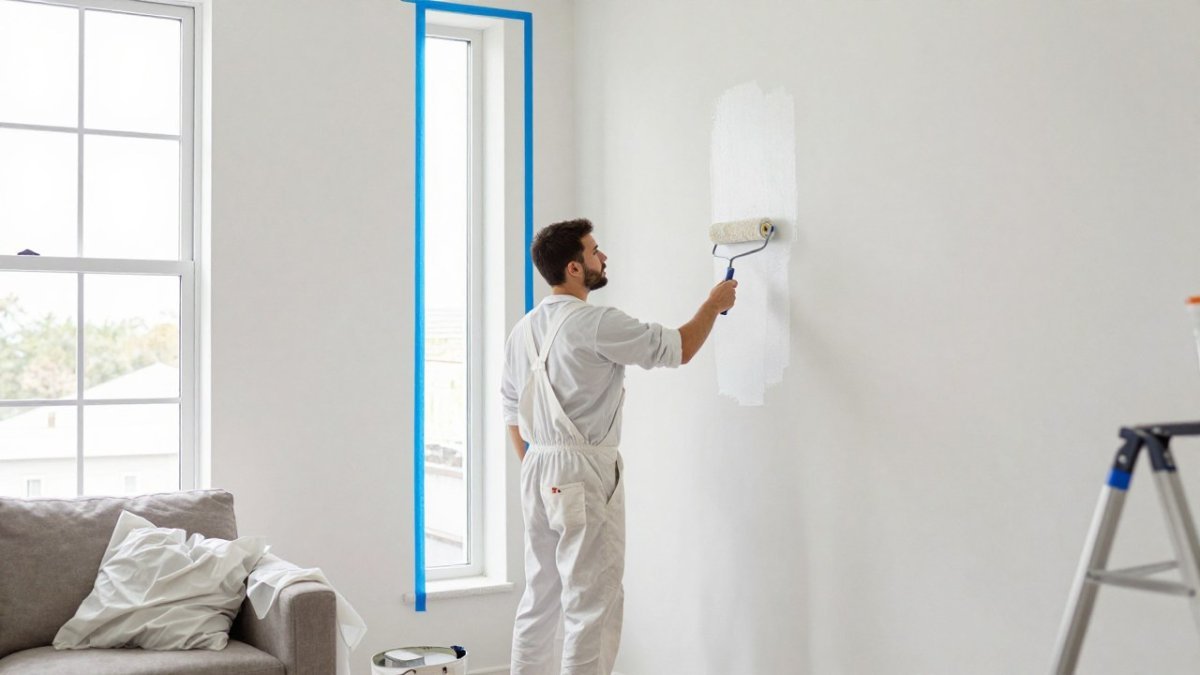
Note that a one-coat repaint over a dark or saturated color will usually need a primer or a third coat regardless of brand, so budget the extra coat into the schedule.
If you want a deeper walkthrough on sheen selection, our guide on how to choose interior paint finish for every room breaks it down room by room.
The Best Paint Colors for Interior Walls
The best paint colors for interior walls in 2026 lean warm and grounded: soft greige, muted sage, and creamy off-whites that read calm under both daylight and lamps. Color trends shift, but the brands that execute them consistently stay the same.
Benjamin Moore is widely regarded for color accuracy, and Sherwin-Williams is known for a large color library and consistent matching. Behr and PPG both offer strong palettes at a lower price point.
A color chip can look different on your wall than it does in the store. Always paint a sample board and view it in the actual room at morning, noon, and night. If you want a curated starting point, our list of warm neutral paint colors narrows the field to shades that work in most North Texas homes.
Coverage, Durability, and What Paint Brands Don’t Advertise
Coverage and durability are where marketing claims and real-world performance part ways. A can that promises one-coat coverage rarely delivers it over a dark wall without a primer.
Hiding power depends on pigment load and the color underneath. Going from a deep red to a light gray will almost always need a primer or an extra coat, regardless of brand. Durability depends on washability and scrub resistance, and here the premium lines justify their price: they resist burnishing and scuffing far better than entry-level paints.
Why Prep Decides How Long the Paint Lasts
Prep decides how long paint lasts more than any brand on the shelf. Paint peels when it bonds to dust, grease, or a glossy surface instead of the wall.
If you want to see what thorough prep actually involves, read our breakdown of the benefits of professional wall prep before painting.
What Paint Brands Cost per Finished Room
Cost per finished room is the number that actually matters, and it is not the same as price per gallon. A cheaper can that needs three coats can cost more in labor and material than a premium can that covers in two. Most brand roundups stop at the shelf price; the math below is the part they leave out.
The Cost-Per-Room Formula
Use this sequence for any room:
- Measure the wall area in square feet, then subtract doors and windows.
- Divide by the coverage a line realistically delivers per gallon.
- Multiply by the number of coats the color change requires. A light-over-light refresh is usually two coats; a dark-over-light or light-over-dark change is usually three, or two plus a primer.
- Add trim and ceiling gallons separately, because they use different products.
- Add labor for each coat, since every additional coat is another pass around the room.
On a single small room, the gap narrows and the budget line can be the smarter buy.
What Moves the Final Number
Pricing depends on the specific line, the square footage, current promotions, and whether the walls need primer. We do not quote per-gallon figures here because they change by region and by sale cycle, and a stale number misleads more than it helps. What we can tell you is how to compare fairly: multiply the number of coats a paint realistically needs by the gallons required, then add the labor those coats take.
Watch out: comparing two brands by shelf price alone ignores coverage and coat count, which is where most of the real cost sits.
Indoor Air and Lower-VOC Choices
Reputable guidance from the EPA’s indoor air quality guidance also matters here: lower-VOC paints reduce odor and improve indoor air, which is worth weighing for bedrooms and nurseries. Lower-VOC lines sometimes carry a modest price premium, so factor that into the per-room total rather than treating it as a separate upgrade.
For a precise number on your project, a written estimate based on your actual walls is the most reliable path. Rooster Painting offers free detailed written estimates, and you can visit the website for current pricing or a quote.
Schedule a Free Color Consultation and Written Estimate
Choosing among the best paint brands for home interiors gets much easier when someone who paints every day narrows the options for your specific rooms. Our free color consultation can help you narrow the brand and finish options for your space and budget.
Not sure the consultation is worth your time? Our article on the benefits of professional color consultation explains what you get and why it prevents costly color mistakes. When you are ready, contact us to request a free, detailed written estimate.
The hardest part of a repaint is not picking a brand. It is trusting that the crew will show up, prep properly, and stand behind the work. Rooster Painting brings over 19 years of experience, a worry-free warranty, and full insurance to every interior project, along with free color consultation and detailed written estimates so you know exactly what you are getting before we start. Get started with Rooster Painting and refresh your home with a finish that still looks right years from now.
Frequently Asked Questions
Is Sherwin-Williams or Benjamin Moore better quality?
The practical difference comes down to the specific line you buy, not just the brand. Match the line to the room, not the logo on the can.
What brand of paint do most professional painters use?
Ask your painter which paint line they plan to use and why, then check that the written estimate names it.
Which interior paint brand offers the best coverage?
Coverage depends as much on application as the formula: a quality roller cover, the right nap, and two thin coats generally beat one thick coat. Skipping primer on patched drywall can show through any brand.
Is expensive interior paint worth the extra cost?
The math changes by room: a low-traffic guest bedroom rarely justifies a top-tier product, while a kitchen or hallway with daily scuffs does. Factor in labor, since repainting sooner costs far more than the difference between a mid-grade and premium gallon.
