Last Updated: November 19, 2026
Quick Summary
Hiring professional painters often costs more upfront, but DIY can end up costing more once your time, tools, and rework are counted. Small, simple rooms with flat walls usually favor DIY, while whole-house, exterior, or repair-heavy jobs usually favor a professional crew.
- Get a written quote and compare it against a complete DIY shopping list, not just the paint.
- DIY projects often need a second coat, touch-ups, and rework that erase the savings.
- Price your own hours honestly before deciding that DIY is free labor.
- Preparation like scraping, patching, and priming determines how long the paint lasts.
- Professionals carry insurance and offer a warranty, while DIY work carries neither.
Table of Contents
- DIY Painting vs Hiring a Professional: The Overall Comparison
- Hiring Professional Painters vs DIY Cost: Materials, Tools and Labor
- How Long Does It Take to Paint a Room, Yourself or With a Crew
- Surface Preparation, Repairs and Finish Quality
- When to Hire a Professional Painter Instead of Doing It Yourself
- Safety, Liability and Warranty Coverage
- Questions to Ask a Painting Contractor Before You Book
- Frequently Asked Questions
DIY Painting vs Hiring a Professional: The Overall Comparison
Choosing between hiring professional painters and painting it yourself comes down to three things: cost, time, and the finish you want. This guide lays out where each option wins. Many homeowners in North Texas start by asking which one costs less, but the cheapest path on paper often becomes the most expensive one in practice. Our goal is to help you see the full picture before you pick up a roller or sign a contract.
DIY painting puts the labor on you. You buy the paint, tools, and supplies, then spend your weekends on prep, cutting in, and cleanup. Professional painters typically bring their own equipment and crews, and they handle the prep work that determines how long the paint lasts.
- DIY works best for: small, simple rooms with flat walls and good access.
- Professionals work best for: whole-house interiors, exteriors, high ceilings, cabinets, and jobs that need drywall repair first.
- The hidden variable: how much your time is worth and how much rework you can tolerate.
Watch out: a rushed DIY job often needs a second coat or a full redo within a year, which erases the savings.
Hiring Professional Painters vs DIY Cost: Materials, Tools and Labor
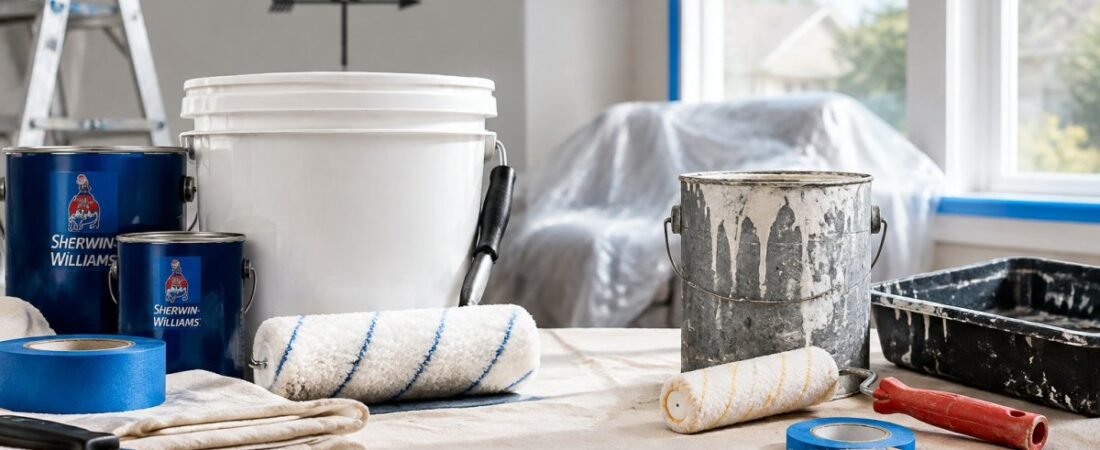
The real cost gap shows up when you list every line item and put a number next to it. DIY projects carry material costs for paint, primer, caulk, tape, drop cloths, and brushes or rollers. You also pay for sprayers, extension poles, and ladders if you don’t already own them. Professional quotes often bundle those materials with labor.
A transparent way to compare is to separate the quote into five buckets: labor, paint and primer, tools and equipment, surface preparation and repairs, and cleanup. Ask any contractor, including us, to break the estimate into those buckets so you can line them up against your own shopping list. Read our hiring guide for booking a professional painting service for a step-by-step walkthrough of the process. Rooster Painting offers free detailed written estimates. Get a free painting estimate for your own project and see the breakdown for your home.
Here is how the categories generally break down, with the variables that move each one:
| Cost Category | DIY | Professional | What Moves the Number |
|---|---|---|---|
| Paint and primer | You buy and estimate quantities | Usually included in the quote | Square footage, number of coats, sheen, and color changes |
| Tools and equipment | You buy or rent | Contractor owns and maintains | Whether you already own rollers, poles, ladders, and a sprayer |
| Labor | Your time | Crew labor included | Local labor rates, crew size, and project complexity |
| Prep and repairs | You handle or hire separately | Often included in scope | Dents, holes, peeling paint, and drywall damage |
| Cleanup and disposal | Your time and dump fees | Usually included | Amount of debris, masking, and floor protection |
Two variables change the break-even point more than any other: room size and local labor rates. On a single small bedroom with flat walls and good access, the DIY material list is short and the professional labor line is a large share of the quote, so DIY can come out ahead on paper. As the project grows to multiple rooms, tall walls, or exterior siding, the professional’s labor line spreads across more square footage and the per-room premium shrinks, while your DIY tool and material list grows and your weekend hours pile up.
Local labor rates work the same way, since professional quotes are driven largely by labor. The practical move is to get a written quote for your specific project and compare it against a complete DIY shopping list that includes tools you don’t own, primer, caulk, tape, and drop cloths, not just the paint.
Watch out: a DIY budget that leaves out primer, patching compound, sanding supplies, and a quality brush and roller set is often incomplete once the first rework is factored in.
How Long Does It Take to Paint a Room, Yourself or With a Crew
Most people underestimate how long a DIY room takes because they count only the painting. A practical estimate breaks the job into four phases, setup and masking, surface preparation, painting, and cleanup, and assigns hours to each.
For a single average bedroom with flat walls and good access, a first-time painter working evenings and weekends commonly spends a few hours moving furniture and masking, several hours patching, sanding, and priming, and then multiple coats of paint with dry time between them. Cleanup and putting the room back together adds more. Spread across evenings and weekends, that sequence often stretches across a week or more of calendar time even when the total working hours are modest. A professional crew can often compress the same sequence into fewer visits.
The number that matters for the comparison is not just the hours, it is what those hours are worth. Treat your time as a real cost rather than free labor. A simple way to do it: estimate your total DIY hours for prep, painting, and cleanup, multiply by an hourly value you would honestly assign to your own time, and add that to your material and tool bill. Compare that total against the professional quote. On a small, simple room the DIY total can still win; on a multi-room or detail-heavy job, a professional quote can come out ahead once your hours are priced in.
A common pattern is that the gap between DIY and professional narrows sharply once you count the second coat, the touch-ups, and the rework that a first-time job tends to require. A professional quote may already account for those hours, while a DIY estimate often does not.
Common mistakes that stretch DIY time well beyond the estimate include:
- Skipping primer on patched areas, which causes visible flashing and a second round of work.
- Painting before the walls are fully dry after repairs.
- Trying to cut in the whole room before rolling, which leaves lap marks and forces a redo.
- Underestimating dry time between coats in humid conditions.
Watch out: a DIY timeline that assumes one coat and no repairs is almost always short; build in the second coat and the patching hours before you decide the project is a weekend job.
Surface Preparation, Repairs and Finish Quality
Preparation determines how the finish looks and how long it lasts. Good prep includes cleaning greasy or dusty surfaces, sanding glossy areas, filling dents and nail holes, and priming bare or patched spots. Skipping these steps is the main reason paint peels or shows patches within a year or two.
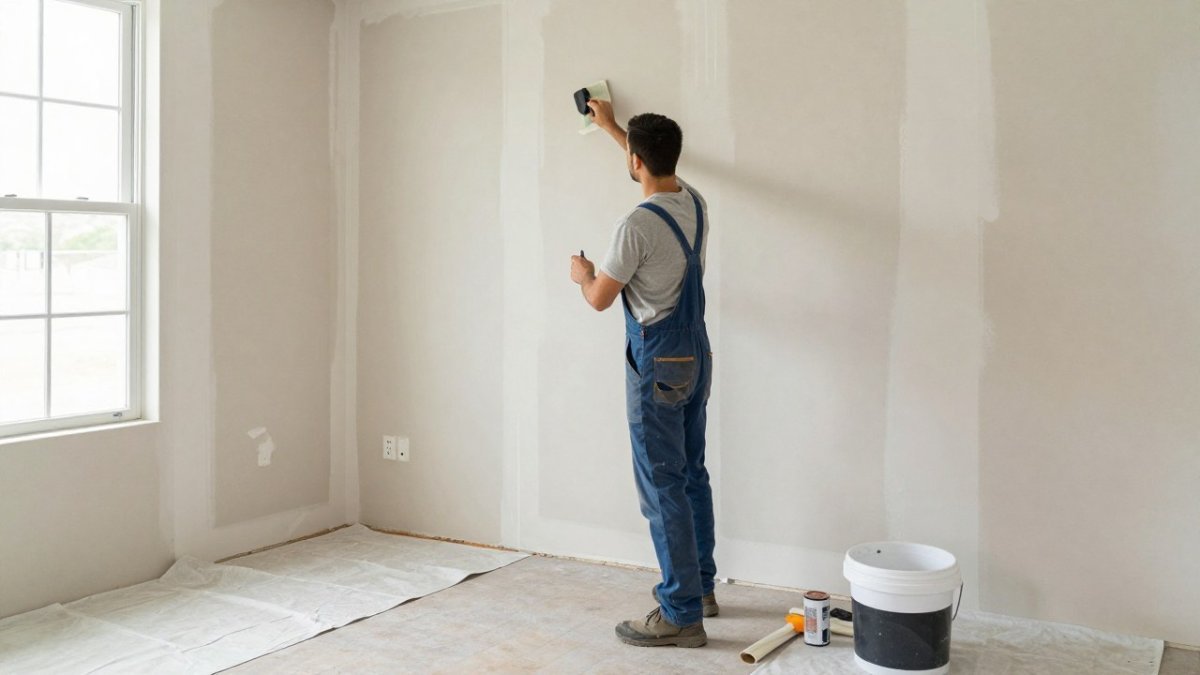
Professional painters generally treat prep as a routine part of the job, including choosing the right primer and recommending drywall repair before paint goes on.
Watch out: painting over peeling paint without scraping it first almost always leads to early failure.
When to Hire a Professional Painter Instead of Doing It Yourself
Some projects are simply better handled by a crew. Consider hiring a professional if the job involves high ceilings, stairwells, exterior siding, or cabinet refinishing. Projects that require drywall repair, popcorn ceiling removal, or water-damage restoration also tend to make sense for a professional team, since those tasks need specialized skills.
A professional is also the better choice if you are preparing a home for sale and need a fast, consistent finish. Rooster Painting offers interior and exterior painting, cabinet painting, and drywall repairs. For a room that needs only a fresh coat on clean walls, DIY may still be the smarter route.
Safety, Liability and Warranty Coverage
Painting involves ladders, chemicals, and dust, and injuries are a real risk for untrained DIYers. Falls from ladders cause serious injuries every year, and sanding can release fine dust that needs proper protection. Before you start, check that you have the right equipment and ventilation for the job.
Liability is the other half of the equation. If a DIY project damages a neighbor’s property or injures someone on your ladder, the cost falls on you. Rooster Painting is an insured painting company. Ask any contractor you consider to confirm their insurance in writing.
Warranty coverage matters too. Rooster Painting offers a worry-free warranty. DIY work carries no warranty, and any problem becomes your job to fix.
Questions to Ask a Painting Contractor Before You Book
Choosing a contractor is as important as choosing between DIY and professional work. Start by asking for a written estimate that lists materials, labor, prep, and the number of coats. A clear scope makes it easier to compare quotes and avoid surprises.
Ask how the contractor preps surfaces, what primer they use on patched areas, and how they handle repairs. Confirm their insurance and what the warranty covers, and ask how they will communicate during the project. Rooster Painting offers a free color consultation.
You can start with these questions when you call:
- Will the quote include all materials, prep, and cleanup?
- How do you handle drywall repair or popcorn ceiling removal?
- What exactly does your warranty cover, and for how long?
- Who will be my point of contact, and how often will you update me?
Ready to compare options for your home? Contact Rooster Painting to tell us about your project and request a free estimate. You can also explore our interior painting services or exterior painting services to see what we include in each project.
Rooster Painting has spent over 19 years helping North Texas homeowners get paint jobs that last, and we’d be glad to help with yours. Schedule your free quote today and get a clear, written plan with no surprises.
Frequently Asked Questions
Is it better to hire painters or paint yourself?
It depends on the size of the job, your skill with prep work, and how much your time is worth. A single bedroom with good walls is a reasonable DIY project for someone patient with tape, brushes and a ladder. Whole-house interiors, exterior work, high ceilings, cabinet refinishing and jobs that need drywall repair often go better with a professional crew. Get two or three written estimates from insured contractors and compare them against what your own materials, rentals and weekends would actually cost.
How much can you save by painting your home yourself?
The savings are mostly the labor portion of a quote, offset by what you spend on paint, primer, rollers, brushes, drop cloths, patching compound, sandpaper and any equipment you rent. A DIYer also pays in time, and mistakes such as rushed prep or uneven coats can lead to repainting. Rooster Painting provides free detailed written estimates.
How long does it take to paint a room yourself?
A typical bedroom often takes a homeowner a full weekend once you include moving furniture, cleaning, taping, patching, priming, two finish coats and cleanup. Drying time between coats and the number of trips for supplies add hours. A professional crew can often finish a comparable room more quickly. Ask any contractor for a start date and a completion window in writing before you sign.
What should I ask before hiring a professional painter?
Ask whether the company is insured, whether the estimate is free and written, what surface preparation is included, which paint brand and sheen are quoted, how many coats are applied, who the crew members are, how communication will work during the project, and what the warranty covers and for how long. A good contractor will answer each question plainly and put the answers in the contract.
